

Rab
Rab Neutrino -6C / 20F Sleeping Bag | Down Sleeping Bag for Alpine Trekking and Mountaineering
Rab Neutrino -6C / 20F Sleeping Bag | Down Sleeping Bag for Alpine Trekking and Mountaineering
Compartir
Couldn't load pickup availability
- 🚚 Fast delivery: 24–48h or special order (~10 days)
- 🏔️ Expert mountain advice
- 🔄 Easy size exchanges
- 🛡️ Secure purchase with real expert support
- 📍 Physical store in Madrid (El Rastro)
Technical specifications
Type
Saco de dormir de pluma
Materials
Relleno de 800FP European goose down con acabado hidrofóbico sin fluorocarbonos de Grangers (400 g). Tejido principal 10D Pertex® Quantum ripstop nylon. Base y footbox en 20D Pertex® Quantum Pro. Forro en recycled 20D nylon 38 g/m².
Total weight
870 g
Features
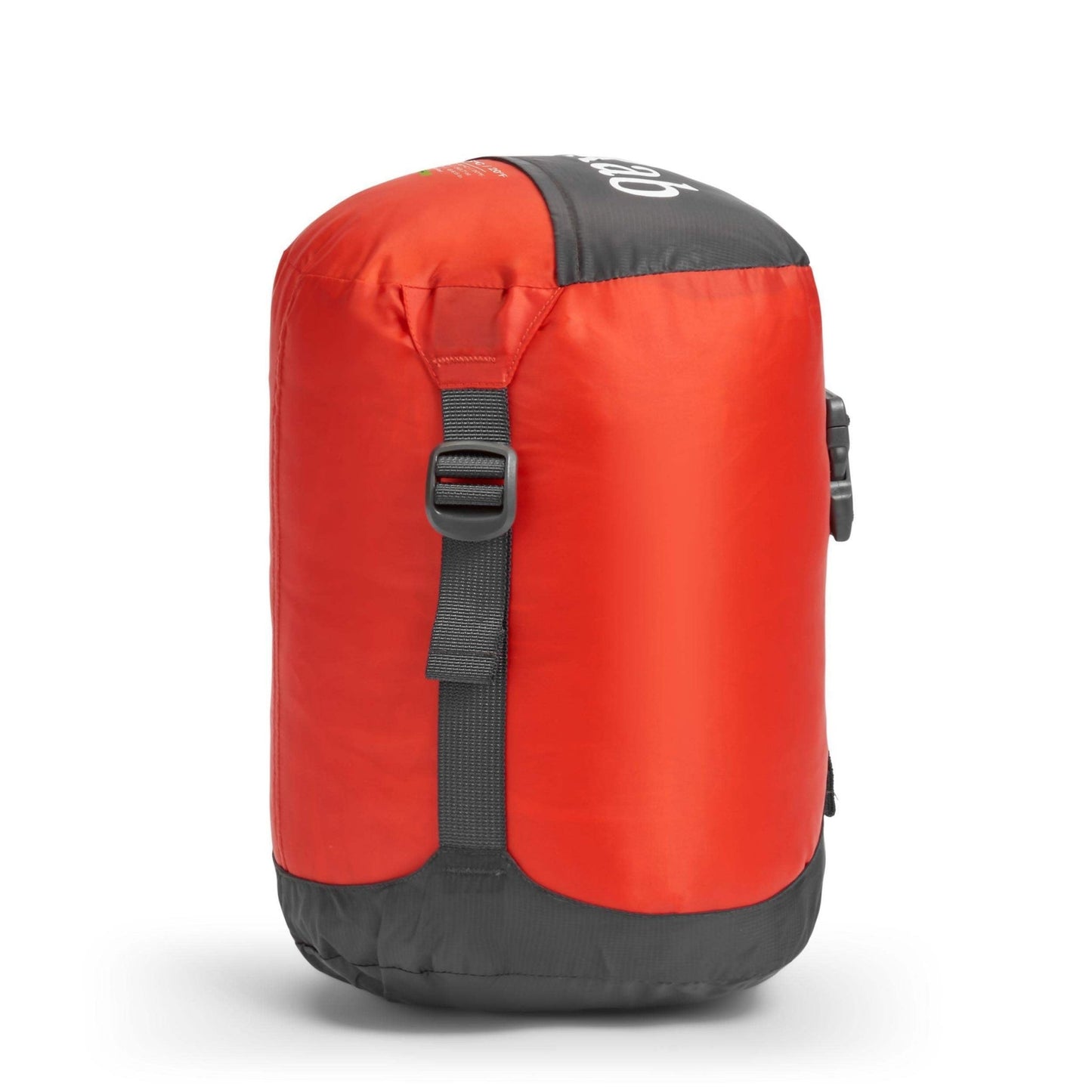
Cremallera YKK® antienganches de doble carro, saco de compresión ligero, bolsa de almacenamiento con base resistente al agua.
Temperatures (ISO EN 23537)
Description
The Rab Neutrino -6C / 20F is a down sleeping bag designed for technical mountaineering, alpine trekking, and bivouacs where the balance between warmth, weight, and volume makes all the difference. Within the Neutrino range, it is one of the most versatile models for those looking for a serious sleeping bag for long three-season use or alpine spring and autumn outings.
Its 800FP European goose down fill, combined with L.O.F.T. 3D™ construction and a strategic combination of Pertex® Quantum and Pertex® Quantum Pro fabrics, delivers an excellent warmth-to-weight ratio, a compact packed volume, and reinforced protection in areas most exposed to wear and moisture.
Real technical performance
The Neutrino -6C is designed for trips where sleeping warm matters, but where you also need the bag to take up little space and not weigh down your pack. The L.O.F.T. 3D™ construction uses chevron baffles to reduce cold spots and improve down stability, while the longitudinal torso baffles help better concentrate heat in the core area of the body.
The base and footbox use 20D Pertex® Quantum Pro for increased durability and protection against ground moisture or condensation, while the 10D Pertex® Quantum upper facilitates loft and keeps weight under control. The result is a highly compact, lightweight bag clearly oriented toward real mountaineering, not basic camping.
Quantitative specifications
- Weight: 870 g / 1 lb 14.69 oz
- Fill: 800FP European goose down with Grangers fluorocarbon-free hydrophobic finish (400 g / 14.1 oz)
- Main fabric: 10D Pertex® Quantum ripstop nylon (26 g/m²) with fluorocarbon-free DWR
- Secondary fabric: 20D Pertex® Quantum ripstop nylon (38 g/m²) with fluorocarbon-free DWR
- Lining: Recycled 20D nylon, 38 g/m²
- Comfort temperature: 0°C / 32°F
- Limit temperature: -6°C / 21°F
- Extreme temperature: -24°C / -11°F
- Packed size: 18 cm x 30 cm (7.1 in x 11.8 in)
- Product code: QSN-16
Comparison within the range
Compared to the Neutrino 0C, this model adds a clear thermal margin for colder nights, higher altitudes, or more serious mountain conditions. Compared to the Neutrino -12C, it maintains a more versatile and less extreme profile, highly suitable for someone who wants a single technical bag for a large part of the year in an alpine environment.
Compared to the Mythic Ultra range, it prioritizes a more robust construction and broader application. Compared to a synthetic bag like the Radeon, it offers better compressibility and a superior warmth-to-weight ratio, although it requires more care if it will be used very frequently in persistently humid environments.
Recommended use
- Alpine trekking and mid- to high-mountain traverses
- Bivouacs in spring, autumn, and summer at altitude
- Lightweight mountaineering where reducing weight and volume is critical
- Users looking for a technical, compact, and versatile down sleeping bag within the Rab range
Is it for you?
Yes, if you are looking for a technical down sleeping bag with a very good balance of warmth, weight, and compressibility. Yes, if you hike with a backpack and want a reliable model for cold nights without moving up to a full-blown winter bag. No, if your priority is carefree use in humid environments or highly variable campsites; in those cases, a synthetic alternative might be a better fit. No, if you need insulation for harsh winter conditions or very cold high-altitude mountaineering, where it is better to step up to the next thermal level.