
Sleeping Bags

How is a sleeping bag constructed?

When it comes to sleeping bag design, there's a lot to unpack. Discover the details of our designs to help you select your next sleeping bag.

Sleeping Bags: Then to Now.

Sleeping bag technology has come a long way. Thousands of years ago, we wrapped ourselves in animal furs and skins just to keep warm. Today, we use cutting-edge insulation technology and fabrics to make the lightest, warmest sleeping bags created for adventures. Even since the first Rab sleeping bag was cut and sewn by hand in the early 80s, their warmth, weight, and efficiency have improved dramatically.

A sleeping bag allows us to explore and experience the world in an extraordinary way. Keeping us warm and comfortable when we need to rest and packing down small when we’re on the move.

  • Confused by deflectors?

    All down bags need baffles. These fabric chambers keep the down in place and prevent it from migrating to one end of the bag, like a duvet on your bed. Baffles can be sewn-through or box-wall. Almost all of our bags use box-wall chambers as this is the best construction method to minimise heat loss.

    Rab Lab Baffle Construction 
  • VOLUME

    We calculate the exact volume of down required within each individual chamber (or baffle) and ensure it is accurate to the gram when filling our down bags at our own factory in Derbyshire.

  • BODY MAPPING

    Further down around the torso and foot box is an efficient way to keep you warm and optimizes the warmth-to-weight ratio.

  • GENDER

    Men and women lose heat differently, and women require an additional 2.5 °C to maintain the same core temperature. Our women's down bags are cut shorter and have narrower shoulders, but are filled with the same volume of down to accommodate this.

  • COMPRESSION

    When you lie in your sleeping bag, the base of the bag is more compressed but the top has better lofting potential. We distribute a different proportion of down to the top and base to make the most of the top's lofting ability.

  • CONCERTINA INSTALLATION

    Single, double, or even triple layers of synthetic sheet insulation are arranged in an accordion-like structure to maximize air entrapment and improve heat retention.

  • OFFSET LOCALIZED QUILTING

    This means that the stitching that holds the insulation in place (quilting) has been minimized to reduce the passage of cold air through the seam lines.

  • IN ACTION

    In this example, you can see two layers (double layer) of insulation with offset localized baffling. The inner layer of insulation is arranged in an accordion (corrugated) shape to trap more air.

    By offsetting the insulation baffling between the exterior and interior of the bag, we can reduce the amount of cold air that can enter the bag through the seam lines.

  • MUMMY-SHAPED CONICAL FORM

    It is our narrowest bag and eliminates "dead space" making it as thermally efficient as possible. This cut will generally mean the bag will roll with you as you sleep. While compromising on space, this shape will maximize performance and minimize pack size and weight.

  • WIDE MUMMY SHAPE

    A more generous cut for greater comfort while sleeping with room to move your legs. These bags will increase in bulk and weight, but will allow for a more relaxed sleeping position.

  • EXTRA-WIDE MUMMY SHAPE

    These bags are typically much larger than the rest of our bags. They allow you to sleep with extra layers, like our Expedition bags, which are designed for extremely cold environments.

  • RECTANGULAR

    These bags are rectangular in shape and often have an L-shaped zipper. You can open them up like a comforter or zip them together to form a double sleeping bag. These bags are all about comfort, space, and versatility.

Some additional things to consider...
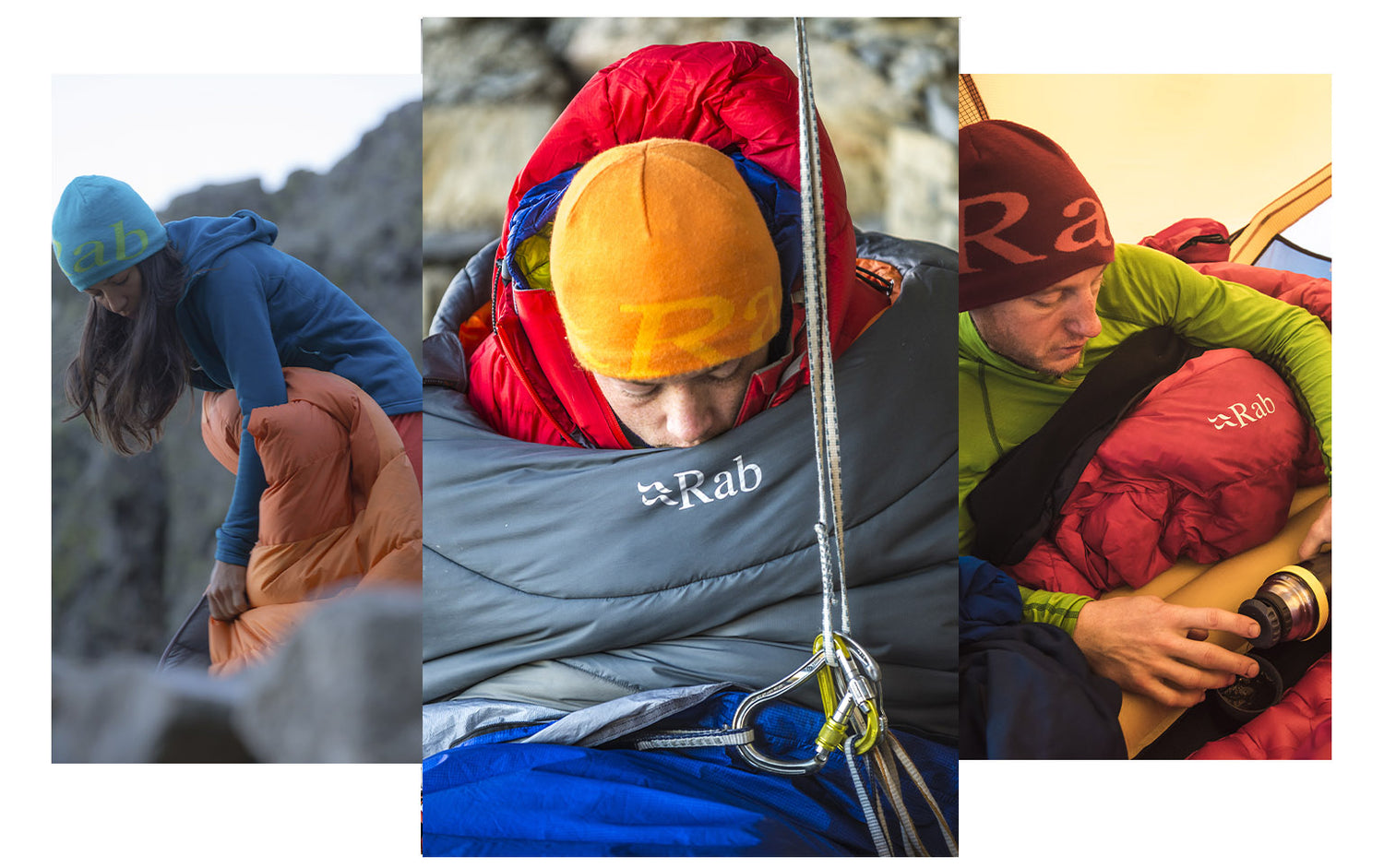
Regardless of the fill power or fill weight, if a sleeping bag is too big for you, you will lose heat. Some of our bags come in more than just the standard size, we offer women's, extra wide, and extra long styles to help accommodate different body sizes. Our Expedition series is oversized to accommodate the bulky insulated clothing required in extreme environments. Like buying a jacket, the best way to ensure a sleeping bag is right for you is to try it on for size, as each model will fit slightly differently.

What does differential cut mean?

Differential cut is the difference in size between the inner and outer shell of the sleeping bag. In some bags, such as our Ascent range, the inner shells tend to be the same size across the range, whilst the outer shells increase in size to accommodate more down.

We use differential cut in conjunction with baffle height to scale the chamber sizes of the bags across a range. A higher fill weight, or a higher fill power of down needs more space to loft.

We believe we use some of the largest differential cuts in the industry, which enables our bags to loft more than our competitors.

  • The hood's drawstring means you can seal in warmth and prevent it from escaping through the top of your head while keeping your face open for comfortable breathing.

  • Draft collars and shoulder baffles with an adjustable drawstring provide a snug fit and keep heat inside the bag.

  • Elastic internal quilting (or seams) draws the insulation to the wearer to eliminate cold spots.

  • An angled (or shark fin) footbox offers a more comfortable position for the toes and minimizes the chance of downward migration and cold spots.

  • Internal zippered pockets keep batteries or your phone warm and handy so you can still hear your alarm on an early morning start on the mountain.    

  • It is also useful to know that all our bags have their statistics printed on the inside of the zipper baffle so that you can always remember what temperature range your bag is designed for.

What temperature is your bag rated for?

All these construction methods, insulation types, and design features will have an impact on your bag's weight and packability, but most importantly, they will influence the temperature range in which it will be most comfortable for your use.

How does it work?

A thermal mannequin is placed inside the sleeping bag during the test on a standard foam roll mat. A series of measurements are taken to see how insulating that sleeping bag is at various temperatures.

  • Comfort Temperature

    The comfort temperature indicates the minimum temperature at which a person can sleep in a relaxed position and get a good night's sleep.

  • Comfort Limit

    The comfort limit rating is the temperature range at which a person sleeping in a curled position and fighting off the cold can still sleep through the night.

  • Calification Extreme

    The Extreme Rating is for an emergency scenario: it is the minimum temperature at which a person can remain in the sleeping bag for up to six hours in a curled-up position while actively fighting off the cold. It is worth noting that frostbite at these temperatures is very possible.

Weight and packability

Sleeping bag temperature ratings can often be a primary concern when purchasing a sleeping bag, but both weight and pack size should be considered in the selection process. 

If you are arriving at your campsite by car or setting up a base camp, then a larger or heavier bag may suffice and be more comfortable. However, when carrying gear in the mountains, often every gram matters. 

In general, bags with a high fill power will be lighter for the same warmth than those using a lower fill rating or even synthetics. 

  • COATING

    In our down bags, TILT is applied to the lining fabric, keeping it as close to the user as possible and maximizing its effect. The silvery sheen of the titanium particles used is physically visible on the inside of the bag, but the fabric remains as soft and lightweight as any other down-resistant material.

  • INTEGRATED

    In our synthetic bags, we use aluminum particles to coat an ultra-thin gauze-like layer (fabric) that is part of the bag's construction. It is placed as close to the body as possible, just behind the lining, to improve its efficiency.

There’s a lot to unpack when it comes to sleeping bags

The next time you're considering buying a new sleeping bag, be sure to look for Rab's Sleep Limit and consider the reasons why one bag might offer higher performance than the other.